A major winter storm is moving into our region this weekend. Forecasters are warning of heavy snow, sleet and damaging ice, especially across Kentucky and southern Indiana, with winter storm warnings in effect across much of the area. Ice on trees and power lines is what typically causes long outages, so it’s worth taking a few minutes now.
Here’s a simple checklist for homeowners with solar panels, home batteries, or both.
Before the Storm: Do This Today
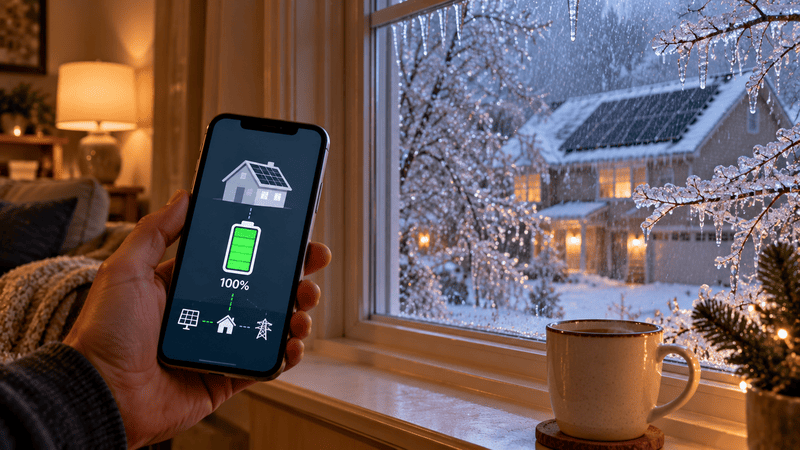
If you have a home battery, make sure its storm mode is on. Most batteries can charge to full ahead of severe weather and hold that energy for an outage:
- Tesla Powerwall: Storm Watch charges Powerwall to full when severe weather is forecast.
- Enphase: Storm Guard watches for National Weather Service alerts and charges your battery when a warning is issued for your area.
- FranklinWH: Storm Hedge switches the system to Emergency Backup and fills the batteries when the National Weather Service issues an alert.
Open your app and confirm the feature is turned on. If you’d rather not rely on automation, you can raise your backup reserve to hold more of your battery for an outage.
Know what’s on your backup circuits. Many systems back up selected circuits, not the whole house. Take a minute to remember what will stay on (like your refrigerator, furnace fan, sump pump, Wi-Fi or lights) so you can plan.
If you have solar panels without a battery, know what to expect. Grid-tied panels automatically shut off when the power goes out. That’s a required safety feature that protects line workers. We explain why in Will Your Solar Panels Work During a Power Outage?
Charge phones and devices, and keep flashlights where you can find them in the dark.
During the Storm
If the power goes out and you have a battery, make it last. Skip large loads like the oven, dryer or electric water heater when you can. Ice-related outages can stretch on, because crews often can’t start repairs until conditions are safe.
Don’t count on your panels to recharge your battery right away. Snow- or ice-covered panels produce very little until they clear. Once they do, even winter sun helps.
If you use a generator, use it safely. Run it outdoors only, well away from doors and windows, and never plug it into a wall outlet to “backfeed” your home. That can endanger you and utility crews. A generator should only connect to your home through a properly installed transfer switch.
Stay off the roof. Never climb up to clear snow or ice from your panels during or right after a storm.
Watch for sliding snow and ice. When the sun returns, snow and ice can slide off panels all at once. Keep people, pets and cars clear of the area below.
Stay away from downed lines. Assume any fallen wire is live and report it to your utility.
After the Storm
Let your panels clear on their own. There’s no need to scrape, chip or pour water on them. Read more in Snow on Your Solar Panels?
Check your monitoring app once the panels are clear and the sun is out. Low production right after a storm is normal. Zero production on a clear day after the snow and ice are gone is worth a call.
Look for damage from the ground. Falling limbs and heavy ice can damage panels, racking or wiring. If you see damage or loose wires, don’t touch anything. Take photos for your insurance company and contact us.
Reset your battery if needed. Most storm modes return to normal automatically once the weather alert ends. If you raised your backup reserve manually, you can set it back.
We’re Here If You Need Us
Icon Solar has been serving homeowners across Ohio, Kentucky and Indiana since 2009. If you have questions about your system before or after the storm, call us at (866) 396-4266. If you’re not a solar owner yet and this storm has you thinking about backup power for next time, we’ll be glad to talk when things settle down. You can learn about the Franklin WH home battery, Enphase and Tesla Powerwall anytime.
Stay warm and stay safe.
Frequently Asked Questions
Do solar panels work during a winter storm power outage?
Grid-tied solar panels without a battery automatically shut off when the grid goes down, as a safety measure for utility workers. A home battery lets your system keep selected circuits running during an outage.
How do I get my home battery ready for a winter storm?
Make sure your battery’s storm mode is on (Storm Watch for Tesla Powerwall, Storm Guard for Enphase, Storm Hedge for FranklinWH), or raise your backup reserve so more charge is held for an outage.
Will my solar panels recharge my battery during a snowstorm?
Panels covered in snow or ice produce very little. Once they clear and the sun comes out, they can start recharging your battery again, even in winter.
Should I clear ice and snow off my solar panels after a storm?
No. Let them clear on their own. Climbing on an icy roof is dangerous, and scraping or chipping ice can damage the panels.
Can I connect a generator to my home with solar panels?
Only through a properly installed transfer switch. Never plug a generator into a wall outlet, and always run it outdoors, away from doors and windows.