It’s one of the most common questions homeowners have about going solar:
“If the power goes out, will my solar panels keep my lights on?”
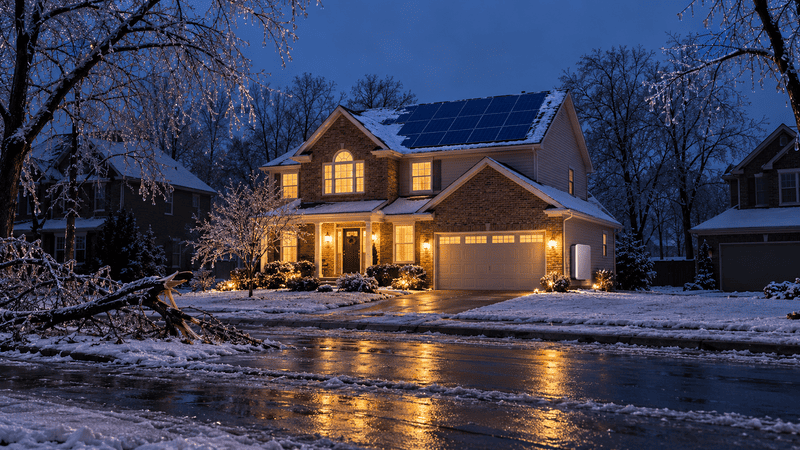
It’s a great question, especially heading into another Midwest winter, when ice storms, heavy snow and high winds can knock out power across Ohio, Kentucky and Indiana.
The honest answer surprises a lot of people: most solar systems shut off during a power outage. But with the right setup, your home can keep running when your neighbors’ houses go dark. Here’s how it works.
Why Most Solar Panels Shut Off When the Grid Goes Down
Most residential solar systems are grid-tied. Your panels work alongside the utility grid: they power your home when the sun is shining, and the grid fills in the rest.
When the grid goes down, a grid-tied solar system automatically shuts itself off within seconds, even on a bright, sunny day.
That isn’t a defect. It’s a required safety feature called anti-islanding.
The Safety Reason: Protecting Line Workers
When utility crews head out to repair downed lines after a storm, they need those lines to be dead. If your solar panels kept pushing electricity back onto the grid, a line worker could be seriously hurt or killed.
That’s why grid-tied inverters in the U.S. are built to meet safety standards known as UL 1741 and IEEE 1547, which require them to detect an outage and stop sending power to the grid. Every reputable installer, Icon Solar included, installs equipment that meets these standards.
So panels alone won’t keep your power on. But that doesn’t mean you’re stuck in the dark.
The Solution: A Home Battery
A solar battery changes the picture completely. Here’s what happens with a battery-backed system:
- When the grid goes down, your system safely disconnects from the utility lines, just like any grid-tied system.
- Your battery takes over, powering your home on its own private circuit, often so quickly you’ll hardly notice the switch.
- Your solar panels keep recharging the battery during daylight hours, even during a multi-day outage.
- When grid power returns, your system reconnects automatically.
The result: your lights, refrigerator, Wi-Fi, sump pump and other essentials keep running while the rest of the neighborhood waits for the utility trucks.
Why Battery Backup Matters in Ohio, Kentucky and Indiana
Power outages aren’t rare. According to the U.S. Energy Information Administration, the average U.S. electricity customer went without power for about five and a half hours in 2022, and most of that time came from major events like severe storms.
Here in the Midwest, outages can come from:
- Winter ice storms that bring down trees and power lines
- Heavy, wet snow weighing on branches and wires
- Severe thunderstorms and high winds in spring and summer
- Remnants of tropical storms pushing inland
For many families, an outage is more than an inconvenience. It can mean a flooded basement when the sump pump stops, spoiled food, no heat when furnace blowers lose power, or no way to run medical equipment.
What Can a Home Battery Power?
That depends on the size of your battery system and how it’s set up. Most homeowners choose one of two approaches:
Essential-load backup. The battery powers a selected set of critical circuits, such as the refrigerator, lights, outlets, internet, sump pump and furnace fan. This makes the most of your stored energy during a long outage.
Whole-home backup. Larger battery systems, or multiple batteries, can power more of your home, sometimes including bigger appliances, depending on your equipment and usage.
During an outage, how long your power lasts depends on how much energy you’re using and how much sunshine is available to recharge the battery.
Battery Options We Install
At Icon Solar, we install three of the leading home battery systems and help you choose the right fit for your home and goals:
- Franklin WH Home Battery: a whole-home energy management system designed for backup power and smart energy control
- Enphase Ensemble: modular battery storage that works with Enphase microinverter systems
- Tesla Powerwall: one of the most recognized home batteries, with app-based monitoring and control
We’ll look at your home’s energy use, your must-have circuits and your budget, then recommend the system that makes the most sense.
Solar + Battery vs. a Backup Generator
Many Midwest homeowners consider a standby generator for outages. Here’s how a solar battery compares:
| Solar + battery | Fuel-powered generator | |
|---|---|---|
| Fuel | Recharges from your solar panels | Needs natural gas, propane or gasoline |
| Noise | Silent | Engine noise while running |
| Fumes | None | Exhaust; must be installed safely outdoors |
| Maintenance | Minimal | Regular engine maintenance and testing |
| Everyday value | Can help you use more of your own solar power | Only used during outages |
The right choice depends on your home and your priorities. Some homeowners even use both.
Already Have Solar? You Can Add a Battery
If you already have solar panels, you may be able to add battery storage to your existing system. It’s one of the most common upgrades we see as homeowners look for more security and control over their energy. Every system is different, so our team will evaluate your current equipment and recommend the best path.
Plan Before the Next Storm
The best time to add backup power is before you need it. Fall is a smart time to plan, so your system can be designed, permitted and installed ahead of the heart of winter.
Whether you’re new to solar or adding a battery to an existing system, Icon Solar has helped homeowners across Ohio, Kentucky and Indiana go solar since 2009. Learn more about solar for your home, explore flexible financing options, or browse our top 10 solar FAQs.
Worried about Midwest weather in general? We bust a few myths in 5 Misconceptions About Solar Power in the Midwest. And if rising bills are on your mind too, here’s why solar is the smartest way to beat rising utility rates.
Get your free quote or call (866) 396-4266 to talk with our team.
Frequently Asked Questions
Do solar panels work during a power outage?
Most grid-tied solar systems automatically shut off during a power outage, even when the sun is shining. This anti-islanding safety feature protects utility workers repairing power lines. To keep power during an outage, you need a solar battery or other backup system.
Why do solar panels shut off when the power goes out?
Grid-tied inverters are designed to meet safety standards (UL 1741 and IEEE 1547) that require them to stop sending power to the grid during an outage. This prevents electricity from flowing into lines that utility crews believe are dead.
Can a solar battery power my house during a blackout?
Yes. A battery-backed solar system disconnects from the grid during an outage and powers your home from the battery. Your solar panels can recharge the battery during the day, helping you ride out longer outages.
Can I add a battery to my existing solar system?
In many cases, yes. Battery storage can often be added to an existing solar system. A solar professional can evaluate your equipment and recommend a compatible battery option.
What will a home battery power during an outage?
It depends on the battery size and setup. Many homeowners back up essential circuits like the refrigerator, lights, internet, sump pump and furnace fan, while larger systems can power more of the home.
Stay Powered Through Whatever Winter Brings
Solar panels lower your electric bills. A battery keeps your home running when the grid can’t. Together, they give your family more independence, security and peace of mind, no matter what the forecast says.