Winter brings shorter days, colder temperatures, wind, and the possibility of snow or ice. A little preparation can help you spot visible concerns before the season changes and understand when a solar system may need attention. Use this homeowner’s checklist to review accessible areas safely, keep useful records, and avoid risky do-it-yourself work.
Start with a safe visual inspection
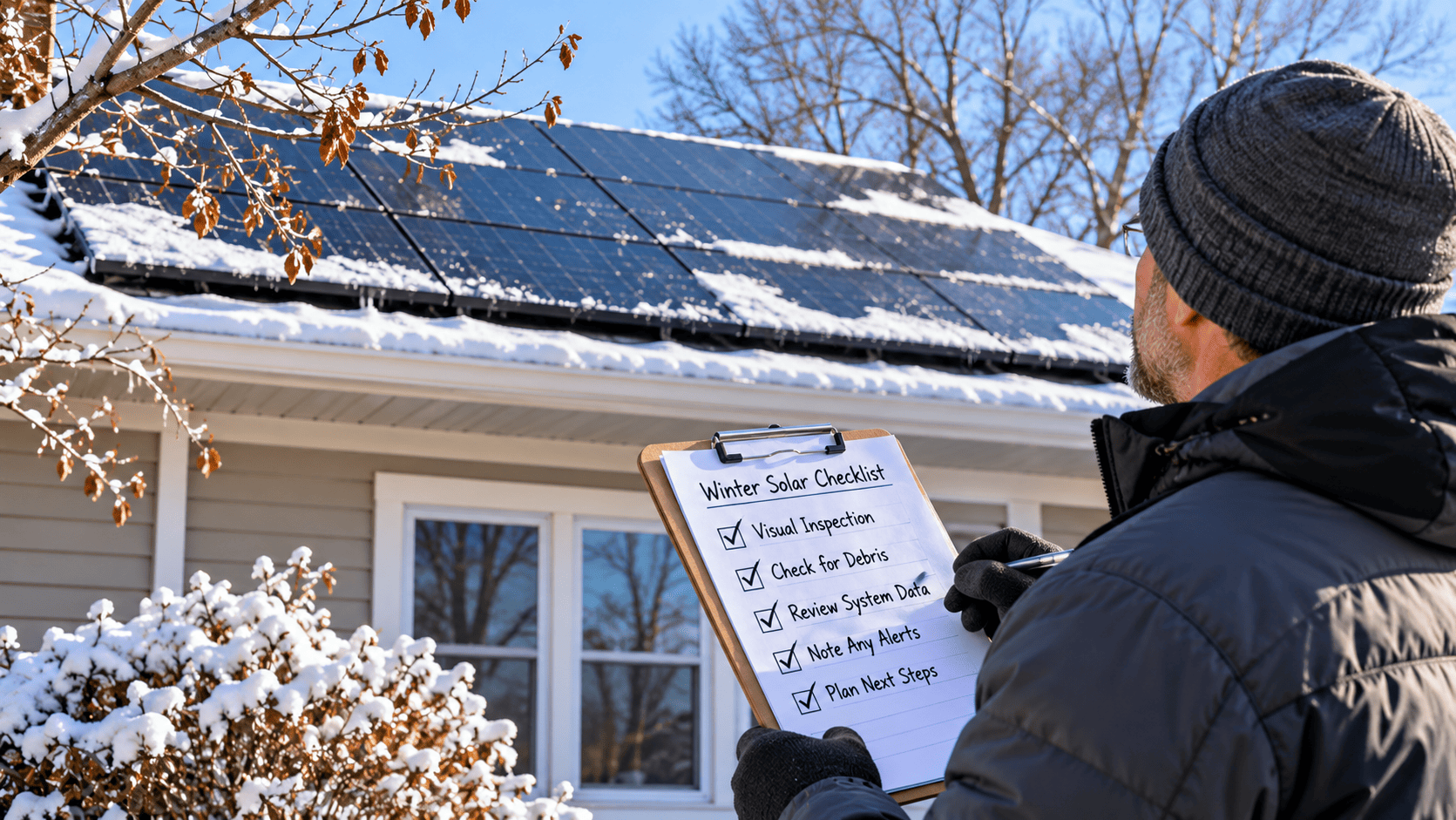
Look over your solar panels and the surrounding area from the ground. Use binoculars if they help you see more clearly, but do not climb onto the roof or lean out of windows to get a closer view. Roof work and electrical equipment can pose serious risks, especially in wet, icy, or windy conditions.
- Look for obvious cracks, loose-looking components, or visible damage.
- Check whether branches, leaves, or other debris appear to be covering part of the array.
- Notice whether anything nearby could fall or blow onto the panels during a storm.
- Look for visible damage to accessible wiring or equipment without touching it.
A ground-level check cannot confirm that every part of a system is working properly. It is simply a way to identify visible changes and decide whether to seek qualified help.
Review system information before winter
If your solar system has a monitoring app, display, or other way to view its performance, check that you can access it and understand the basic information it provides. Compare current readings with your own recent history rather than expecting the same output every day. Seasonal daylight, cloud cover, and weather can affect how much energy a system produces.
Make a note of unusual alerts, extended gaps in data, or changes that seem out of character for your system. Save screenshots or write down the dates and details. A clear record can help when you ask a qualified professional to review a concern.
Keep the area around panels in mind
Before winter weather arrives, consider what may affect the array from nearby trees or structures. Overhanging branches can drop leaves and twigs, while strong winds may move loose items around. Do not cut branches near the roof or panels unless the work can be done safely by someone equipped for it. When in doubt, leave the task to an appropriate professional.
Also make sure you know where accessible system equipment is located, such as the inverter or monitoring hardware, without opening covers or handling wiring. Keep stored items away from equipment, and follow any instructions provided for your particular system.
What to do about snow and ice on solar panels
Snow may temporarily cover panels and reduce the sunlight reaching them. Avoid climbing onto a roof, using a ladder in icy conditions, or scraping panels with tools. Do not pour hot water or apply products to melt snow or ice. These approaches can create safety hazards or damage equipment.
Follow the instructions provided for your system, and allow conditions to change naturally when that is the safest option. If snow or ice remains a concern, or you notice damage after severe weather, ask a qualified professional for guidance rather than attempting roof work yourself.
When to seek qualified help
Contact a qualified professional if you see visible damage, receive a persistent system alert, notice a substantial unexplained change in system information, or have concerns about exposed or damaged wiring. Do not touch damaged components or attempt electrical repairs. If there is an immediate safety concern, keep people away from the affected area and seek appropriate assistance.
It can also be useful to ask for help when you cannot safely inspect a roof-mounted array or are unsure whether an observed change needs attention. Describe what you noticed, when it began, and any alerts or readings you recorded. Avoid diagnosing the cause based only on a visual check.
Winter solar maintenance checklist
- Inspect panels and nearby areas from a safe position on the ground.
- Note visible damage, debris, or potential hazards nearby.
- Confirm you can access system monitoring information, if available.
- Record unusual alerts or changes for reference.
- Avoid roof access, panel scraping, and contact with electrical components.
- Seek qualified help for damage, persistent alerts, or unsafe conditions.
A careful winter check is about noticing concerns, not taking unnecessary risks or performing repairs yourself. For questions about solar maintenance, contact Icon Solar to discuss your concerns and determine an appropriate next step.