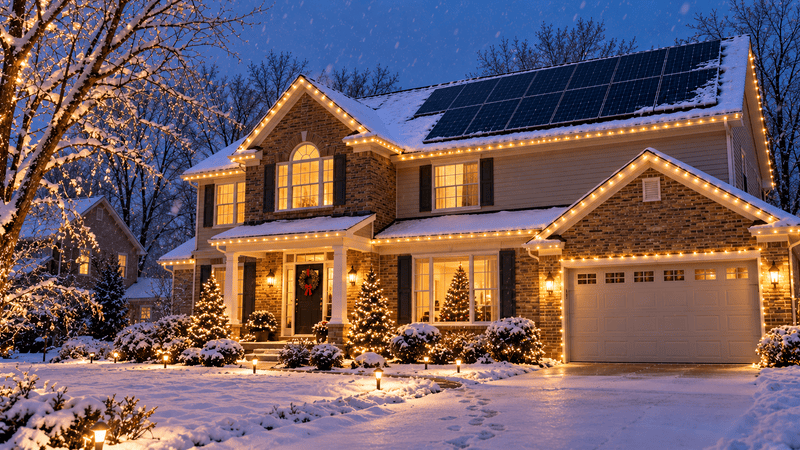
It’s Christmas Eve. The lights are up, the neighbors have made their best efforts, and somewhere in the back of your mind is a small question: what is all this going to do to my electric bill?
The answer depends almost entirely on one thing: whether your lights are LED or old-school incandescent. We ran the numbers.
Watts Per Bulb: The Number That Matters
A single small incandescent mini bulb uses about 0.4 watts, so a 100-light strand draws about 40 watts. LED minis use a tiny fraction of that, roughly 0.05 watts per bulb.
The big, old-fashioned C9 bulbs that outline rooflines are a different story. Incandescent C9s typically use 5 to 7 watts each, so a 100-bulb run can draw about 700 watts.
That’s why ENERGY STAR certified LED light strings are required to use at least 70% less energy than conventional incandescent strands, and real-world savings are often much higher.
What a Typical Display Costs for the Season
Here’s an example for a display running 6 hours a night for 40 nights (roughly Thanksgiving weekend through New Year’s), or 240 hours total. We used 16 cents per kWh, close to Ohio’s 2024 average residential rate. Indiana averaged a bit under 15 cents and Kentucky about 13 cents, so your costs may be lower.
| Display | Approx. watts | Energy for the season | Cost at 16¢/kWh |
|---|---|---|---|
| 1,000 incandescent mini lights | 400 W | 96 kWh | $15.36 |
| 1,000 LED mini lights | 48 W | 11.5 kWh | $1.84 |
| 100 incandescent C9 bulbs | 700 W | 168 kWh | $26.88 |
| 100 LED C9 bulbs | about 100 W | 24 kWh | $3.84 |
Put a 1,000-light tree and a 100-bulb roofline together, and an all-incandescent setup runs about $42 for the season. The LED version runs about $6.
Want to check your own display? Look at the wattage on the box or tag, then use this formula:
Watts ÷ 1,000 × hours per night × nights × your rate per kWh = your cost
Inflatable yard decorations, animated displays and projectors all vary, so check the label on each one.
Easy Ways to Cut Holiday Lighting Costs
- Switch to LED as old strands burn out. LEDs also run cool to the touch and last far longer.
- Use a timer or smart plug. Running lights 6 hours instead of all night cuts the cost by roughly three-quarters.
- Turn off indoor tree lights at bedtime. That saves energy and reduces fire risk.
- Don’t overload circuits. A standard 15-amp household circuit shouldn’t carry more than about 1,440 watts continuously. Spread big displays across circuits, and use outdoor-rated cords and lights outside.
Where Does Solar Fit In?
Here’s the honest answer: your holiday lights come on after dark, when your solar panels aren’t producing. December is also the lowest production month of the year, because the days are short.
That doesn’t mean solar can’t help. How your daytime solar production offsets your evening use depends on how your utility credits solar customers. A home battery takes the guesswork out: it stores solar energy during the day so you can use it after sunset, holiday lights included. It also keeps the lights on (literally) if a winter storm knocks out power. Learn more in Will Your Solar Panels Work During a Power Outage? and on our Franklin WH home battery, Enphase and Tesla Powerwall pages.
Holiday lights are a small part of most winter bills. Heating, cooking and longer evenings indoors add up faster. If this month’s bill has you thinking about the bigger picture, now is a good time to look at what solar could do for your home all year long. See why winter is a smart time to start the process.
From All of Us at Icon Solar
Icon Solar has helped homeowners across Ohio, Kentucky and Indiana go solar since 2009. From our team to yours, merry Christmas and happy holidays.
When you’re ready, explore solar for your home, review solar financing options, or request your free quote. You can also call us at (866) 396-4266.
Frequently Asked Questions
How much electricity do Christmas lights use?
A 100-bulb incandescent mini light strand uses about 40 watts, while a 100-bulb LED mini strand uses about 5 watts. Large incandescent C9 bulbs use 5 to 7 watts each, so a 100-bulb strand can draw about 700 watts.
How much does it cost to run Christmas lights for the season?
At 16 cents per kWh, running 1,000 incandescent mini lights 6 hours a night for 40 nights costs about $15. The same display in LED costs about $2. Use your bulbs’ wattage and your own rate to estimate your cost.
Are LED Christmas lights worth it?
For most households, yes. ENERGY STAR certified LED light strings use at least 70% less energy than incandescent strands, last longer and stay cool to the touch.
Can solar panels power my Christmas lights?
Not directly at night, because panels only produce while the sun is up. A home battery can store daytime solar energy for use after dark. How your daytime production offsets evening use without a battery depends on your utility’s billing rules.
How many Christmas lights can I plug into one circuit?
A standard 15-amp household circuit should carry no more than about 1,440 watts of continuous load. Check each product’s wattage and spread large displays across multiple circuits.