Yes, solar panels can produce electricity during winter. Shorter days, lower sun angles, and seasonal weather can change how much energy a system generates, but cold weather alone does not stop solar panels from working. Understanding these seasonal effects can help homeowners review their system’s performance with realistic expectations.
How solar panels work in winter
Solar panels generate electricity from sunlight, not heat. They can continue producing power on clear, cold days when sunlight reaches the panels. In some conditions, cooler temperatures can support efficient panel operation. However, winter often brings fewer daylight hours and a lower sun angle, so panels may receive less sunlight overall than during longer, brighter days.
Cloud cover also matters. Panels can generate electricity in overcast conditions, though output may be lower than in direct sunshine. The amount depends on the weather, the system, and the sunlight available at a particular location. That is why winter production can vary from day to day as well as from season to season.
Why solar production may change in winter
Several seasonal factors can affect the electricity a solar system produces:
- Shorter days: With fewer daylight hours, there is generally less time for panels to receive sunlight.
- Lower sun angle: The sun follows a different path across the sky in winter, which can change how much direct sunlight reaches a panel.
- Clouds and storms: Overcast skies and stormy weather can reduce the sunlight available for electricity generation.
- Snow or debris: A covering on the panels can limit sunlight reaching their surface until it clears.
- Shade: Seasonal changes in the sun’s path may affect when nearby trees or structures cast shadows on a system.
These factors do not affect every system in the same way. Local climate, system orientation, shading, and other site-specific details all play a role. A winter dip in output does not, by itself, prove that a system has a problem.
What snow and cold weather mean for solar panels
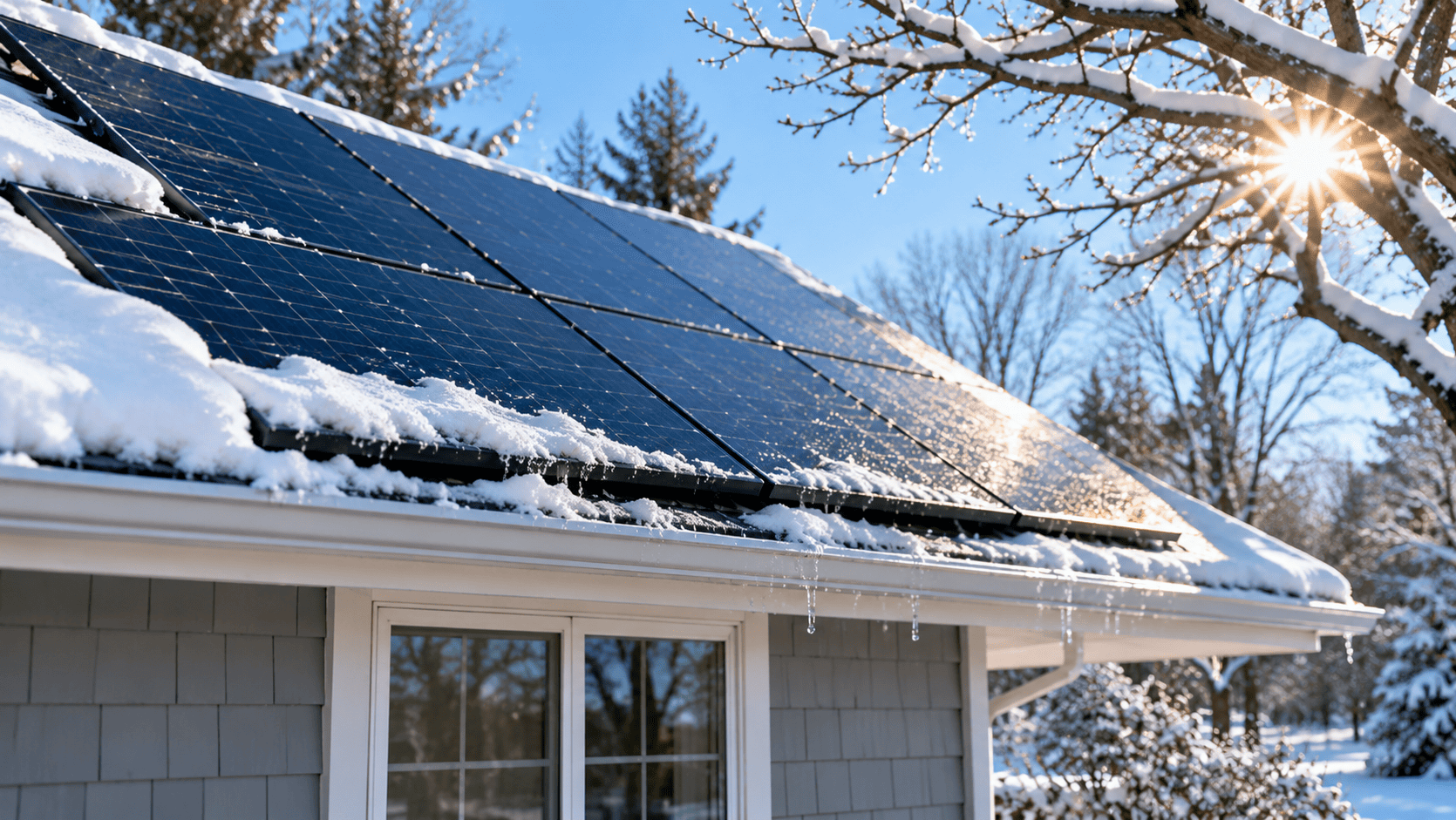
Light snow may slide or melt as conditions change, but snow that remains on a panel can temporarily reduce or prevent production from the covered area. The effect depends on how much of the system is covered and how long the snow stays in place. Once sunlight reaches the panels again, production can resume.
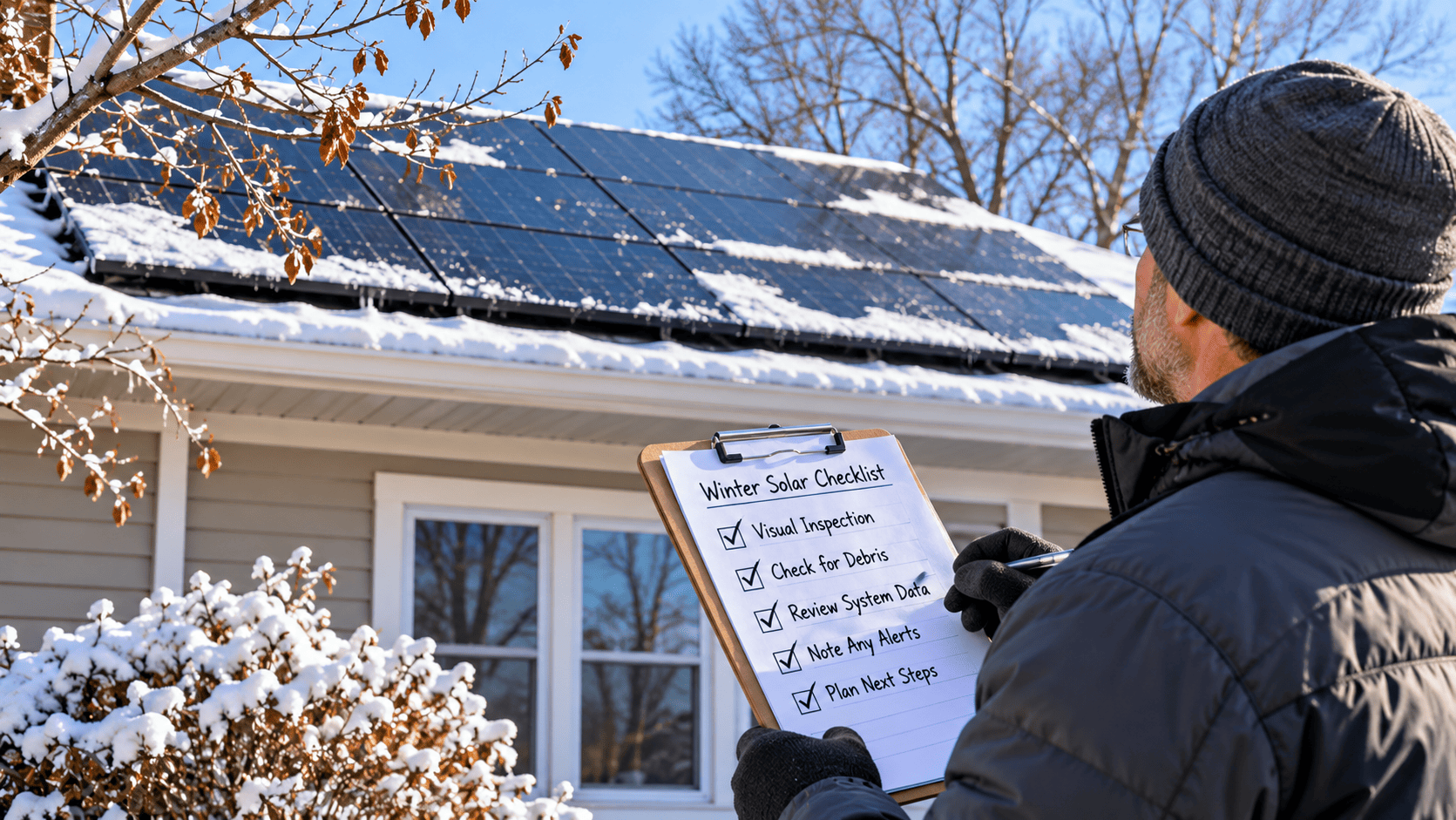
Homeowners should use caution around roof-mounted equipment. Avoid climbing onto a roof or using tools in a way that could damage panels or create a safety risk. For questions about snow, cleaning, or system care, consult the system’s documentation or seek guidance from a qualified professional familiar with the installation.
How to review winter solar performance
When checking a system, look at its production over time rather than drawing conclusions from one cloudy day. If monitoring is available, compare similar periods and consider the season and weather. A gradual seasonal change may be expected, while an unexpected pattern that persists could be worth investigating.
- Review available production information over several days or weeks.
- Consider daylight hours, clouds, snow, and any visible shading.
- Look for changes that continue beyond ordinary weather fluctuations.
- Refer to system documentation for guidance on monitoring and maintenance.
- Contact a qualified professional if you have concerns about a persistent or unusual change.
Electricity use can also change during colder months. Heating, lighting, and household routines may affect how much energy a home needs, so production and usage are separate pieces of the overall picture. Reviewing both can give homeowners a more useful understanding of seasonal performance.
Set practical expectations for winter solar energy
Solar panels can work through winter, but seasonal production is not necessarily the same as production during sunnier, longer days. Weather, daylight, shading, and snow all influence the energy available. The best way to understand a particular system is to consider its own production information alongside local conditions, rather than relying on a single day or a general expectation for every home.
For homeowners exploring solar or looking for general guidance about seasonal solar production, Icon Solar is a solar business and a place to begin a conversation about solar energy.